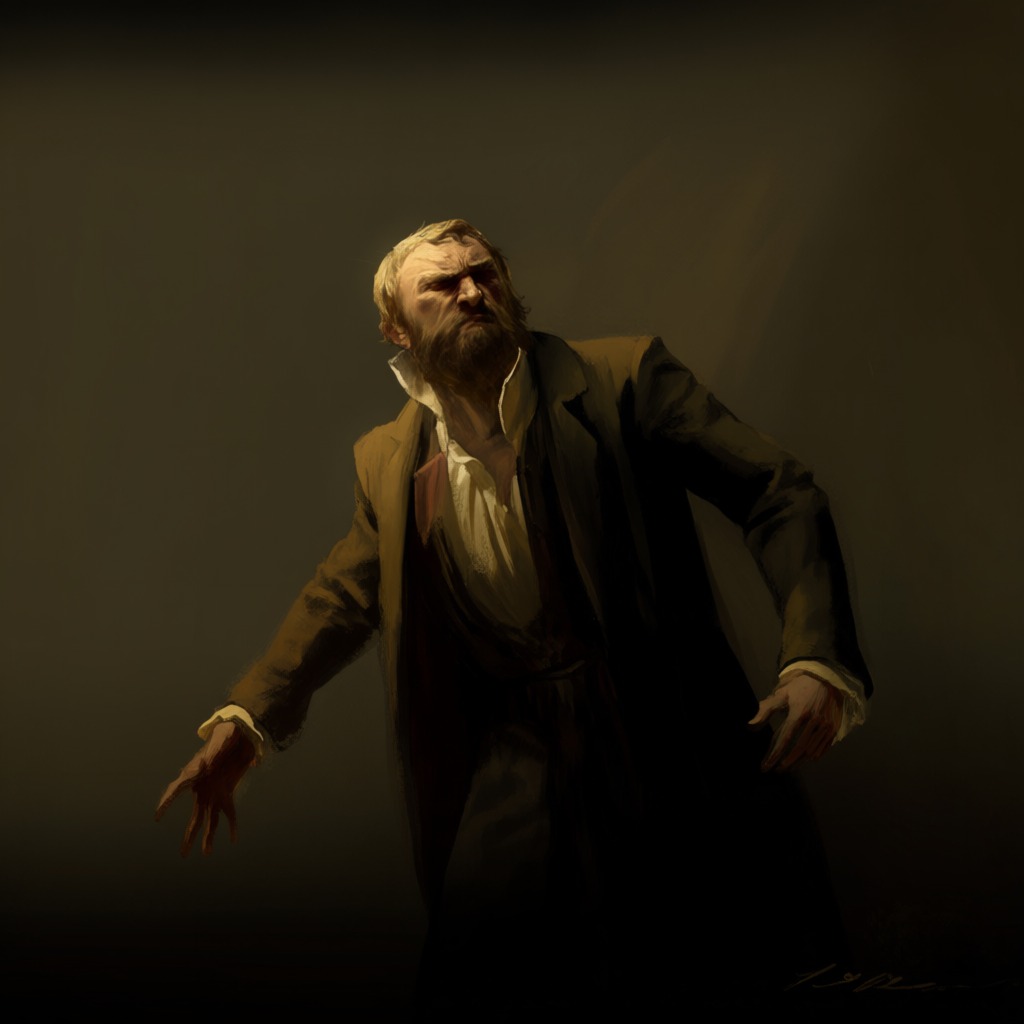
Execution of Julien Rossignol
Julien Rossignol’s execution in the town square of Girot is the culmination of a life fractured by war and a final, redemptive act of paternal love. A poet and bookseller broken by the Great War and his wife’s death, he had long failed his daughters, Vianne and Isabelle. Yet in the final months of World War II, he chose to sacrifice himself to protect Isabelle, the true leader of the Nightingale escape route, from the Gestapo. His death, a staged confession and a firing squad, becomes the ultimate reparation for a lifetime of neglect, transforming a cowardly collaborator in the eyes of his children into a hero who finally, fatally, chose them.
Background and the Fractured Father
Julien Rossignol was a man unmade by loss. After returning from the Battle of the Somme in World War I, he was a changed man—angry, silent, and drinking heavily. The death of his wife, Madeleine, when Isabelle was only four, shattered him completely. He abandoned his daughters to a cold stranger in Carriveau, a decision that defined their childhoods. Vianne, the elder, learned to accept his rejection and build her own life, while Isabelle spent years hurling herself against the wall of his disinterest, desperate for his love. He sent her away to a series of boarding schools and convents, and when she was expelled from the last one, he met her at the train station with irritation, not affection. He later forced her to flee Paris during the German invasion, a pattern of pushing her away that she came to see as his defining trait.
The Secret Resistance and a Changed Man
Unknown to his daughters, Julien’s apparent collaboration with the Nazis was a cover for his work in the French Resistance. He forged identity papers for the network run by his old friend Paul Lévy, using his position at the German high command in Paris to steal blank documents. It was he who created the false identity of “Juliette Gervaise” for Isabelle, the name she would use as a courier and, later, as the legendary passeur known as the Nightingale. When Isabelle returned to Paris to work for the network, he initially tried to send her away to protect her, but she refused. In a rare moment of honesty, he admitted his failures as a father, saying, “I am no good as a father. We both know that. At least not since your maman’s death.” He revealed his true work to her, and for the first time, a fragile connection formed between them.
The Arrest and the Confession
Isabelle was arrested at Micheline Babineau’s farmhouse in Urrugne and brutally tortured by the Gestapo under Rittmeister Schmidt. She was beaten, burned with cigarettes, and locked naked in a freezing refrigerator, but she held out for two days, giving the network time to scatter. When she was near death, Schmidt brought in a man in shackles: her father. Julien, seeing his daughter’s broken, bloodied state, immediately confessed. He declared to Schmidt, “I am the Nightingale,” a lie he knew would mean his own death. Isabelle, from her cell, screamed that she was the Nightingale, but her father’s claim was accepted. He had come to Girot to sacrifice himself, having told Vianne beforehand, “What would you do to save Sophie?” He understood that this was the only way he could finally tell Isabelle he loved her.
The Execution and Its Aftermath
Julien was dragged into the sunlit square of Girot, where a firing squad stood ready. He stumbled across the cobblestones, past a fountain, and faced his executioners. Across the square, he met Isabelle’s gaze through the bars of her cell window. He mouthed the words “I love you” before the shots rang out. His body was later lashed to the fountain in the square, a public display of Nazi retribution. Vianne, who had come to Girot to help her sister, discovered her father’s bullet-ridden corpse there, a sight that would haunt her. Isabelle, who had watched the execution from her cell, was left with the knowledge that her father had given his life for hers, a final, devastating gift that redefined their entire relationship.
The Letter and Thematic Significance
Before his sacrifice, Julien visited Vianne in Carriveau and gave her a letter to be read by both sisters after his death. In it, he wrote, “What I do now, I do without misgiving. My regret is not for my death, but for my life. I am sorry I was no father to you.” He confessed that he remembered Isabelle running away to Paris, needing his love, and that he had turned away. The letter ended with a plea for forgiveness and a declaration of love: “Forgive me, my daughters, for all of it, and know that as I say good-bye, I loved you both with all of my damaged heart.” The execution of Julien Rossignol is the story of a man who, too late, found the courage to be a father. His death, a direct consequence of his love, becomes the catalyst for his daughters’ eventual reconciliation and a testament to the idea that even the most broken of men can find redemption in a final, selfless act.